


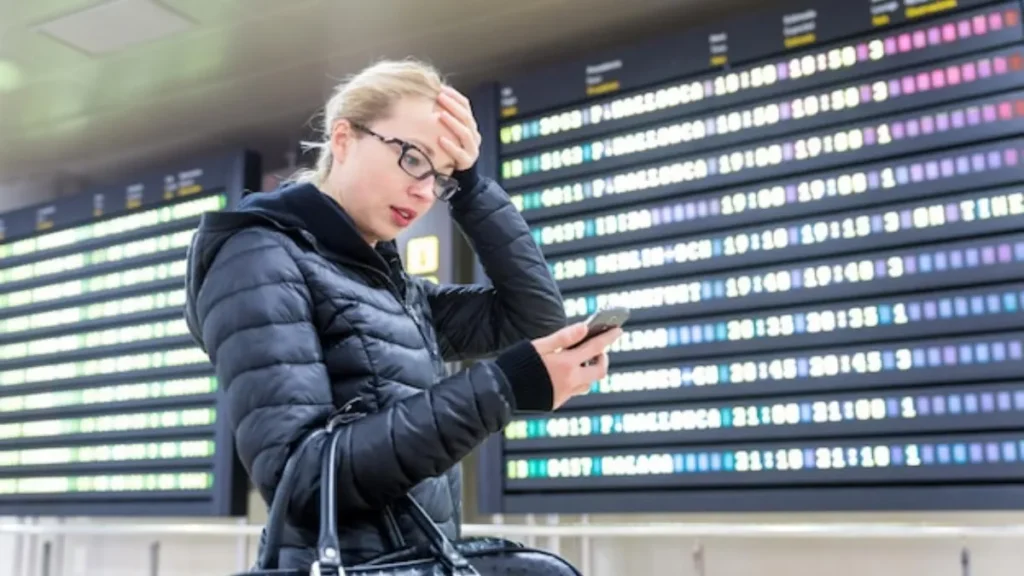
U.S. airport weather disruptions are becoming a growing concern for travelers and airlines as late-summer storms threaten to create more delays, cancellations and complicated flight schedules across the country.
The problem is not limited to passengers caught directly beneath a storm. A thunderstorm system can disrupt a major airport, delay aircraft and crews, and then create a chain reaction affecting flights in cities hundreds of miles away.
As the late-summer travel period continues, airlines and airports are preparing for another difficult stretch in which weather could determine how smoothly the nation’s aviation network operates.
Storms Can Quickly Change Airport Operations
Airports rely on predictable arrival and departure patterns.
When severe weather moves into an airport’s operating area, that predictability can disappear quickly.
Thunderstorms can force aircraft to avoid certain airspace, reduce runway capacity and make it more difficult for controllers to safely sequence arrivals and departures.
Even a relatively short period of severe weather can therefore create significant congestion.
Aircraft may be forced to remain on the ground, circle before landing or divert to another airport.
The Impact Can Continue After the Storm
One of the most frustrating aspects of U.S. airport weather disruptions is that delays often continue after skies begin to clear.
The reason is the interconnected nature of airline schedules.
A single aircraft may be scheduled to operate several flights during a day.
If the first flight is delayed, the aircraft may arrive late for its next departure.
That delay can then move to another city.
The same thing can happen with flight crews.
When pilots and flight attendants are delayed for several hours, their schedules may need to be changed because of duty-time restrictions.
Major Hubs Face the Greatest Risk
Large airline hubs are particularly vulnerable.
These airports handle huge numbers of passengers and flights, making them essential parts of the national aviation network.
When a hub slows down, the impact can spread rapidly.
A passenger traveling from a smaller regional airport may have a connection through a major hub.
Even if the passenger’s original airport has perfect weather, the trip can still be disrupted by storms at the connecting airport.
That makes weather planning important for travelers across the country.
Late Summer Does Not Mean the End of Storm Risk
Many travelers associate summer with clear skies and easy flying.
But late summer can still bring significant thunderstorms across different parts of the United States.
Warm, humid conditions can contribute to rapidly developing storms.
These systems can be difficult to predict precisely, particularly when they form near major transportation corridors.
Airlines therefore monitor weather forecasts continuously throughout the day.
Airlines Have to Balance Speed and Safety
When storms approach, airlines face difficult operational decisions.
They may reroute flights around severe weather.
They may delay departures until conditions improve.
They may cancel flights when continuing operations would create unacceptable risks or logistical problems.
Passengers may understandably become frustrated when a flight appears to be delayed despite the weather looking manageable from the terminal.
But the conditions encountered at cruising altitude or along another portion of the route can be very different from what passengers see on the ground.
Air Traffic Control Adds Another Layer
The Federal Aviation Administration also plays an important role.
When severe weather affects airspace, controllers may introduce traffic-management measures.
These can reduce the number of aircraft entering certain areas.
While such restrictions can increase delays, they help prevent dangerous congestion.
The aviation system must constantly balance demand with the amount of airspace and airport capacity available at any given moment.
Weather can dramatically reduce that capacity.
Flight Cancellations Can Create Larger Problems
Delays are frustrating, but cancellations can be even more disruptive.
When an airline cancels a flight, passengers need alternative transportation.
During busy travel periods, later flights may already be full.
That can leave travelers with limited options.
Some passengers may have to take a flight the following day.
Others may need to change their routes or travel through a different airport.
Families and international travelers can face particularly difficult consequences when disruptions affect hotel bookings, rental cars or onward transportation.
Travelers Should Monitor Their Flights
Passengers traveling during periods of severe weather should check their flight status regularly.
Airline applications are often the quickest way to receive updates.
Travelers should also monitor their connecting flights, not just the first segment of the journey.
A flight that remains scheduled does not necessarily guarantee that a passenger will make the connection if the first flight is delayed.
Planning for additional connection time can reduce some of the risk.
Flexibility Can Make a Difference
Travelers who have flexible schedules may have more opportunities to avoid the worst disruptions.
If airlines offer flexible rebooking during major weather events, passengers may be able to move to a different departure.
In some situations, changing an itinerary before a cancellation is officially announced can provide more options.
However, passengers should always check the specific rules of their airline and ticket.
Airports Are Also Preparing
Airports cannot control the weather, but they can prepare for its operational consequences.
Ground crews may need to adjust staffing.
Airlines may reposition aircraft.
Airport operations teams monitor weather conditions and coordinate with air traffic authorities.
The objective is to recover normal operations as quickly as possible once conditions improve.
But recovery takes time when thousands of passengers and hundreds of aircraft have already been affected.
Technology Is Helping Predict Disruptions
Weather forecasting and aviation technology have become important tools in managing severe-weather events.
Airlines can monitor storms in real time and adjust routes.
Flight-dispatch systems can help identify alternative paths.
Airport operations teams can anticipate periods of congestion.
But technology cannot eliminate physical weather constraints.
A severe thunderstorm still requires aircraft to keep a safe distance.
Travelers Are Becoming More Weather-Aware
Weather has become an increasingly important part of travel planning.
Passengers now have access to detailed forecasts and real-time flight information through their smartphones.
That allows travelers to make decisions earlier.
For example, a passenger may choose to arrive at the airport earlier, avoid a tight connection or contact an airline before a major disruption becomes widespread.
Being informed cannot prevent a delay, but it can make the response easier.
The Broader Challenge for U.S. Aviation
The latest U.S. airport weather disruptions demonstrate how vulnerable modern air travel can be to severe weather.
The country has an enormous aviation network connecting thousands of communities.
That network is efficient when conditions are normal.
But its interconnectedness also means disruptions can spread quickly.
A storm in one region can influence aircraft schedules across several states.
More Disruptions Could Remain Possible
Late-summer weather will continue to be an important factor for airlines and travelers.
Passengers should therefore avoid assuming that a scheduled departure time guarantees a smooth trip.
Weather can change rapidly, and operational decisions may change with it.
Travelers can reduce some of the uncertainty by checking flight statuses before leaving home, allowing extra time for connections and keeping important travel arrangements flexible when possible.
The Summer Travel Challenge Continues
The growth of U.S. airport weather disruptions is a reminder that air travel depends on a delicate balance between weather, infrastructure, airspace and demand.
Airlines can improve forecasting and scheduling.
Airports can expand capacity.
The FAA can adjust traffic flows.
But severe storms will always impose limits on what aircraft can safely do.
For passengers, preparation remains the best defense.
As late-summer travel continues, travelers should keep an eye on weather forecasts and airline notifications—and be prepared for the possibility that a routine journey could take considerably longer than expected.
Source angle: Recent FAA and aviation-industry reporting on severe weather, airport capacity, air-traffic management, flight disruptions and the operational challenges facing U.S. airlines during the late-summer travel season.