


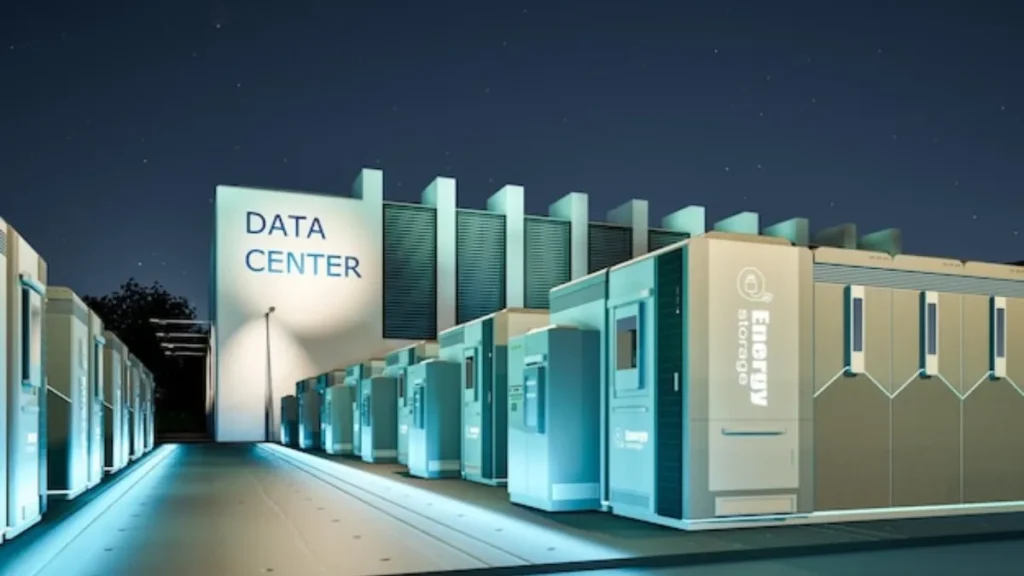
Texas is confronting a new challenge created by the artificial-intelligence boom: how to accommodate billions of dollars in data-center investment without allowing rapidly rising electricity demand to overwhelm local power systems and communities.
The debate is becoming increasingly important as technology companies and data-center developers expand across the state. AI systems require enormous amounts of computing power, and that computing power requires equally enormous amounts of electricity.
Texas has become one of America’s biggest destinations for data centers because of its available land, business-friendly environment and growing energy infrastructure. But the same advantages are now creating concerns among residents, utilities and policymakers.
AI Is Changing the Power Equation
Traditional data centers already consume substantial amounts of electricity.
AI-focused facilities can require significantly more power because they operate large clusters of high-performance processors around the clock.
As companies build larger AI systems, their demand for computing capacity continues to increase.
That is forcing energy planners to consider whether the state’s electricity grid can expand quickly enough.
Local Communities Are Pushing Back
The growth of data centers has created resistance in some Texas communities.
Residents have raised concerns about electricity prices, water consumption, noise, land use and the construction of large industrial facilities near residential areas.
For communities that expected traditional commercial or residential development, the arrival of a massive data center can represent a dramatic change in local infrastructure requirements.
Electricity Demand Is the Central Issue
Texas already has one of the largest electricity markets in the United States.
The state’s population and industrial economy have expanded rapidly, increasing demand for electricity.
Now AI data centers are adding another major source of consumption.
Grid planners must determine how much additional generation and transmission capacity will be required.
ERCOT Is Under Pressure
The Electric Reliability Council of Texas, known as ERCOT, operates the state’s main electricity grid.
Its responsibility is to maintain a balance between electricity supply and demand.
Large data centers can complicate that task because their electricity requirements can be enormous and highly concentrated in specific locations.
If several facilities are built in the same region, local grid infrastructure may need significant upgrades.
Data Centers Want Reliable Power
Technology companies cannot afford frequent power interruptions.
AI workloads depend on highly reliable electricity.
That has encouraged data-center developers to seek dedicated power arrangements and new generation capacity.
Some projects are being planned alongside natural-gas, solar, battery and other energy resources.
New Infrastructure Takes Time
Building electricity generation is not an overnight process.
Power plants require permitting, financing, construction and transmission connections.
Transmission lines can take years to develop.
That creates a timing challenge.
AI companies can announce major data-center projects quickly, but the infrastructure required to power them may take considerably longer.
Policymakers Face a Difficult Choice
Texas officials want to attract technology investment.
Data centers can generate construction activity, property-tax revenue and demand for local services.
They can also help position Texas as a major center for the AI economy.
But policymakers must balance those benefits against infrastructure costs.
Who Pays for Grid Expansion?
One of the biggest questions is how much of the infrastructure investment should be paid by data-center operators.
If utilities build new capacity that primarily serves large technology customers, regulators may consider whether those customers should bear a greater share of the costs.
The answer could affect electricity prices for other customers.
Residential Consumers Are Watching
Households are particularly sensitive to electricity prices.
Texas consumers have already experienced periods of significant power-market volatility.
If new industrial demand requires major infrastructure investment, residents want assurance that they will not be forced to absorb disproportionate costs.
That concern is becoming part of the political debate.
Water Use Is Another Concern
Many data centers use water-based cooling systems.
In regions facing water stress, that can become controversial.
Texas has significant differences in climate and water availability across its communities.
A data center that is practical in one location may create greater environmental concerns in another.
AI Investment Still Has Major Economic Benefits
Despite the controversy, data centers bring economic opportunities.
Construction projects can create jobs.
Local governments can collect taxes.
Technology companies can attract additional investment.
Suppliers of electrical equipment, construction materials, cooling systems and networking hardware can benefit.
The challenge is making sure those benefits outweigh the infrastructure burden.
Texas Wants to Remain an AI Leader
Texas has positioned itself as one of the leading destinations for AI infrastructure.
Companies are attracted by available land, energy resources and a favorable business environment.
Restricting development too aggressively could push some investment toward other states.
That creates another concern for policymakers.
Other States Are Competing
States across the country are competing for data-center projects.
Virginia, Georgia, Arizona, Ohio and other markets have attracted major technology investments.
If Texas becomes too restrictive, developers may have alternatives.
But those states face their own electricity, water and infrastructure challenges.
The Grid Is Becoming Part of AI Strategy
The data-center debate demonstrates a broader reality.
AI is no longer just a software story.
It is increasingly an infrastructure story involving electricity generation, transmission, real estate and industrial construction.
The companies that can secure reliable power may gain a major competitive advantage.
Natural Gas Is Gaining Attention
Natural gas has become an important option for meeting growing electricity demand.
Gas-fired generation can provide reliable power and can often be developed more quickly than some other large-scale generation projects.
But environmental concerns and emissions remain part of the debate.
Renewable Energy Is Also Expanding
Texas has become a major renewable-energy market, particularly for wind and solar power.
Those resources can contribute significant electricity to the grid.
However, their variable production creates challenges for data centers that require continuous power.
That increases interest in battery storage, natural gas and other sources of firm power.
Nuclear Power Could Become More Important
The enormous electricity requirements of AI are also renewing interest in nuclear energy.
Nuclear plants can provide continuous electricity with low operational carbon emissions.
However, new nuclear projects require substantial capital and long development timelines.
Investors Are Watching the Power Constraint
Power availability is becoming an increasingly important factor in technology investment.
A company may have the money and equipment to build an AI data center but still face delays if electricity connections are unavailable.
That can slow deployment and increase costs.
What Policymakers Are Watching
Texas officials and regulators are focused on:
- Electricity demand
- ERCOT reliability
- Data-center permitting
- Transmission capacity
- Power-generation investment
- Water consumption
- Consumer electricity costs
- Local tax revenue
- Environmental impact
- AI infrastructure growth
These issues will shape the next phase of the state’s data-center expansion.
The Bigger National Issue
Texas is effectively becoming a test case for a challenge that other states will face.
America wants to lead the global AI race.
But AI leadership requires massive amounts of physical infrastructure.
That infrastructure requires electricity, land, water, construction and transmission capacity.
Communities must decide how much growth they are willing to accommodate.
What Comes Next
Texas is likely to continue attracting major AI investment, but future projects may face greater scrutiny.
Developers could be required to provide stronger plans for electricity supply, water usage and community impact.
Utilities may also seek new arrangements that ensure large customers pay an appropriate share of infrastructure costs.
The Bottom Line
Texas is facing growing pressure to balance its ambition to become an AI infrastructure leader with rising concerns about the enormous power requirements of new data centers.
The issue is bigger than technology.
It is about how quickly electricity generation, transmission networks and local infrastructure can expand to support a new generation of computing.
If Texas can build enough power while protecting consumers and addressing community concerns, the state could remain one of America’s biggest winners from the AI boom. If infrastructure constraints become too severe, however, data-center developers may increasingly look elsewhere.
The debate unfolding in Texas could ultimately serve as a blueprint—or a warning—for states across America preparing for the next wave of AI infrastructure investment.
Source angle: Texas data-center expansion, AI electricity demand, ERCOT grid reliability, local community concerns, power-generation investment and the growing infrastructure requirements of America’s AI economy.