


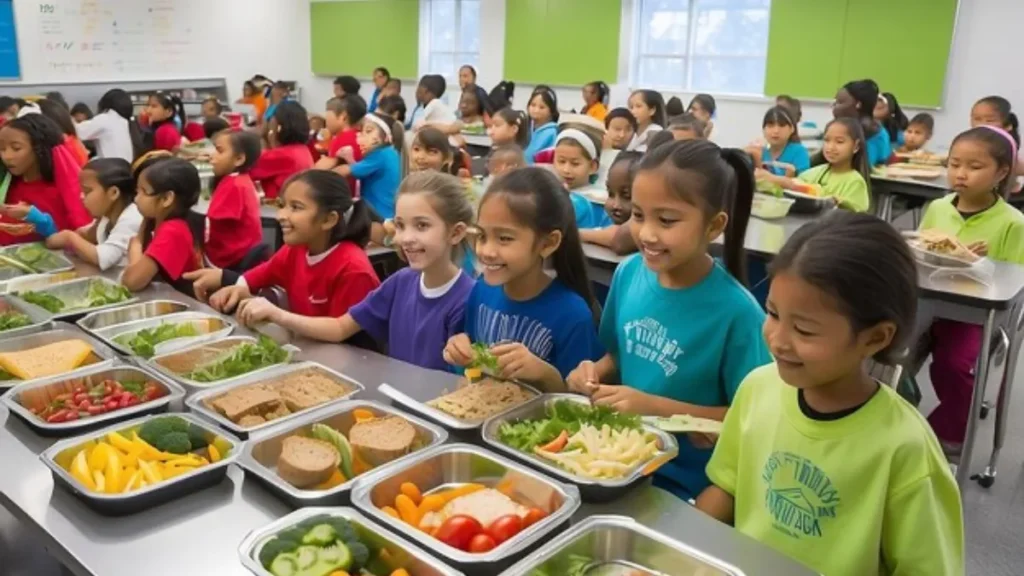
A new federal school nutrition push is putting local food, healthier meals and stronger connections between schools and American farmers at the center of the national conversation about what children eat during the school day.
The initiative comes as federal officials seek to strengthen school meal programs and give students greater access to nutritious food. The effort is also designed to support local agriculture by encouraging schools to source more food from nearby producers.
For families, the policy could mean changes not only to what appears on school lunch trays, but also to how schools think about nutrition, food sourcing and long-term student health.
A New Focus on School Meals
School meals serve millions of children across the United States every day.
For some students, breakfast and lunch at school represent a significant portion of their daily nutrition.
That makes the quality of school food an important public-health issue.
Federal officials are now emphasizing meals built around nutritious ingredients while encouraging schools to strengthen relationships with local farmers and food producers.
Connecting Schools With Local Farmers
One of the major goals is to increase opportunities for schools to purchase food from local sources.
Local procurement can allow schools to use more regionally produced fruits, vegetables, dairy products, meat and other foods.
It can also provide additional markets for farmers.
The approach creates a potential connection between nutrition policy and local economic development.
Healthier Choices for Students
Nutrition advocates have long argued that school meals should provide children with balanced options that support growth and learning.
A healthier school menu can include more fruits and vegetables, whole grains and appropriate sources of protein while reducing reliance on highly processed foods.
The federal initiative places greater attention on those principles.
Why Nutrition Matters in the Classroom
What children eat can affect how they feel and function during the school day.
Students need adequate nutrition to support physical development and daily activities.
Schools therefore face a responsibility that extends beyond academics.
A well-designed meal program can become part of a broader effort to improve student well-being.
Supporting American Agriculture
The initiative also has an economic dimension.
When schools purchase from local farmers and food producers, more public food spending can remain within regional economies.
Farmers gain another customer base, while schools may gain access to fresher seasonal products.
That relationship can strengthen local food systems.
Rural Communities Could Benefit
The impact could be particularly important in rural communities.
Local schools and agricultural producers often operate in the same regions.
Creating stronger purchasing relationships could help farmers diversify their customer base.
It could also expose students to foods grown in their own communities.
Schools Face Practical Challenges
Expanding local food procurement is not always simple.
Schools have budgets, nutritional requirements, storage limitations and strict food-safety standards.
Local farms may not always have the capacity to supply large quantities consistently.
Transportation and distribution can also become challenges.
Cost Remains a Key Question
School districts must operate within limited budgets.
Healthier ingredients can sometimes cost more, particularly when schools need to purchase them in large quantities.
Federal funding and procurement support can therefore be important in helping districts make changes without reducing the number of meals served.
Food Safety Is Essential
Local sourcing does not remove the need for strict food-safety controls.
Schools must ensure that food is produced, transported and stored safely.
Suppliers must meet applicable requirements, and school kitchens must maintain proper handling procedures.
Seasonal Menus Could Become More Common
A stronger local-food approach could encourage schools to build menus around seasonal availability.
That could mean more fresh produce during harvest periods.
Seasonal menus can also introduce students to different foods throughout the year.
For some children, school meals may provide an opportunity to try foods they do not regularly eat at home.
Parents Are Paying Attention
School nutrition has become an increasingly visible issue for parents.
Families want to know whether school meals provide adequate nutrition and whether children are actually willing to eat them.
A meal can meet nutritional standards but still fail if students consistently throw it away.
That makes taste and presentation important parts of the equation.
Student Participation Matters
Schools may increasingly involve students in menu decisions.
Taste tests, surveys and nutrition education can help cafeterias understand what children prefer.
The goal is to create meals that are both nutritious and appealing.
Nutrition Education Could Expand
The initiative could also encourage schools to teach students where food comes from.
Lessons about farming, nutrition and food preparation can complement school meal programs.
Students can learn how food choices affect health while gaining a better understanding of local agriculture.
The Broader Health Challenge
The school nutrition effort comes amid continuing concerns about childhood nutrition and long-term health.
Poor dietary habits established during childhood can continue into adulthood.
Improving access to healthier foods at school could therefore have benefits that extend beyond the classroom.
Food Waste Remains a Concern
Schools must also address food waste.
If students do not like healthier meals, cafeterias can end up throwing away significant quantities of food.
That makes menu development and student feedback essential.
Schools need to balance nutritional goals with meals students will actually consume.
Technology Could Help
Modern food-management systems can help schools track purchasing, inventory and waste.
Data can show which meals students choose most often and which foods are discarded.
That information can help administrators adjust menus and reduce unnecessary spending.
Small Districts Need Support
Large school systems may have more purchasing power and staff resources.
Smaller districts may need additional assistance to establish relationships with local producers.
Federal and state programs could help bridge that gap.
What This Means for Families
Parents may begin seeing more locally sourced ingredients and healthier menu options in school cafeterias.
The pace of change will vary by district.
Schools will still need to work within their budgets, infrastructure and supplier availability.
The Bigger Picture
The initiative represents a broader shift in how policymakers view school food.
School meals are not simply a service provided during the school day.
They are also part of public health, agricultural policy and community economic development.
Connecting those areas could create benefits across multiple sectors.
What Comes Next
Schools, farmers and local food producers will determine how quickly the initiative translates into changes on lunch trays.
Districts will need to evaluate costs, suppliers and student preferences.
Parents and students are likely to remain important voices in the process.
The Bottom Line
A new federal school nutrition initiative is placing healthier meals and locally sourced food at the center of efforts to improve what American students eat during the school day.
The approach could benefit children by expanding access to nutritious foods while supporting farmers and regional food systems.
But implementation will require schools to overcome practical challenges involving cost, supply, storage, food safety and student acceptance.
The success of the initiative will ultimately depend on whether schools can turn policy goals into meals that are nutritious, affordable and appealing enough for students to actually eat.
If that balance can be achieved, school cafeterias could become more than places where children receive lunch—they could become an important part of America’s broader strategy for improving childhood nutrition and strengthening local food economies.
Source angle: Federal school nutrition policy, local food procurement, healthier school meals, student nutrition, American agriculture and efforts to strengthen school food programs.