


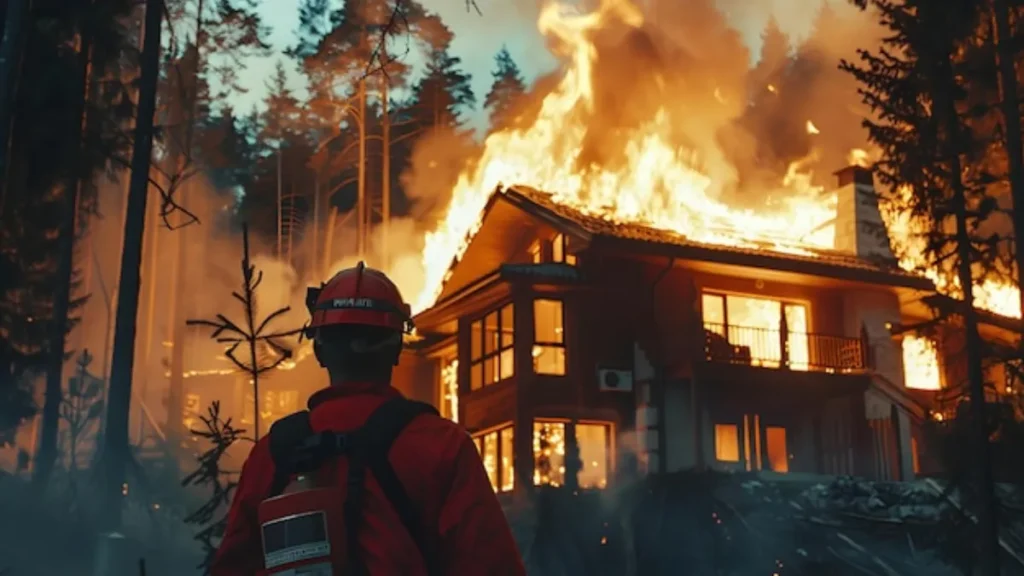
A major wildfire near Reno has exposed a new vulnerability for Nevada homeowners: having a homeowners insurance policy no longer necessarily means having wildfire protection.
The Hawk Fire, which burned more than 15,000 acres in the Reno area, destroyed dozens of homes and forced widespread evacuations. At the same time, Nevada is operating under a new insurance law that allows carriers to remove wildfire coverage from standard homeowners policies, leaving some residents facing difficult questions about whether their property is actually protected.
Nevada’s Insurance Rules Changed in 2026
The insurance landscape changed on January 1, 2026, when Nevada Assembly Bill 376 took effect.
The law allows property insurers to exclude wildfire from standard homeowners coverage and either sell wildfire protection separately or exclude the peril altogether. Nevada became the first state to explicitly allow insurers to remove wildfire coverage from a standard homeowners policy under this framework.
The policy change was designed partly to encourage insurers to continue operating in areas where wildfire exposure has made property coverage increasingly difficult to price.
But for homeowners, the change creates another layer of complexity.
A homeowner may have a current policy and assume wildfire damage is covered without realizing that the protection has been separated, modified or excluded.
Hawk Fire Highlights the Risk
The recent Hawk Fire brought those concerns into sharp focus.
The blaze near Reno burned more than 15,000 acres, destroyed at least 47 homes and prompted evacuations affecting tens of thousands of residents at the height of the emergency. Nevada Gov. Joe Lombardo declared a state of emergency for Washoe County. By August 31, officials reported the fire was 98% contained.
Some homeowners affected by the fire discovered they did not have wildfire insurance.
That can leave families responsible for rebuilding costs that can reach hundreds of thousands of dollars, particularly when a home is located in a higher-risk area and insurance is difficult or expensive to obtain.
For residents who do have coverage, the Nevada Division of Insurance has urged policyholders to understand exactly what their policies provide.
Evacuation Costs May Still Be Covered
Wildfire insurance is not limited to the cost of rebuilding a destroyed house.
Depending on the policy, homeowners forced to evacuate may qualify for loss-of-use or additional living expense coverage. That can help pay for temporary housing, hotels and certain food expenses while an insured property cannot be occupied.
Nevada insurance officials have been providing direct assistance to Hawk Fire survivors, helping residents understand claims, home inventories and additional living expenses.
Officials have also advised residents to preserve receipts and other records related to evacuation costs because reimbursement depends on individual policy terms and limits.
Reno Already Faces Insurance Pressure
The problem predates the Hawk Fire.
Washoe County, which includes Reno, has experienced a disproportionate share of Nevada’s homeowners insurance cancellations and nonrenewals.
According to reporting from The Nevada Independent, more than 1,600 homeowners’ policies were canceled or not renewed in Washoe County in 2024, while the state recorded about 13,600 requests for new homeowners coverage that were declined statewide that year. More than 6,000 of those declined applications were in Washoe County.
That means homeowners are confronting both sides of the insurance problem: policies can become harder to obtain, while new laws can allow wildfire coverage to be separated from traditional home insurance.
A Difficult Balance for Nevada
Supporters of AB 376 argue that giving insurers greater flexibility could help keep companies in Nevada rather than encouraging them to withdraw from wildfire-prone markets altogether.
Consumer advocates, however, have warned that separating wildfire coverage could leave homeowners exposed if standalone coverage is too expensive or unavailable.
That tension is becoming more important as Western states confront larger and more destructive fires.
For Nevada homeowners, the lesson from the Reno-area fires is increasingly clear: a homeowners policy should not automatically be assumed to include wildfire protection.
Residents in fire-prone areas may need to review whether wildfire is specifically covered, whether it has been excluded, what deductibles apply and whether additional living expense coverage is available.
The Hawk Fire has therefore become more than another Nevada wildfire story. It is a real-world test of a new insurance system—and a warning that homeowners may need to examine the fine print before the next evacuation order arrives.
Source Angle: Reporting from the Nevada Division of Insurance, The Nevada Independent and Reno-area news outlets on AB 376, Hawk Fire losses and the changing availability of wildfire coverage.