


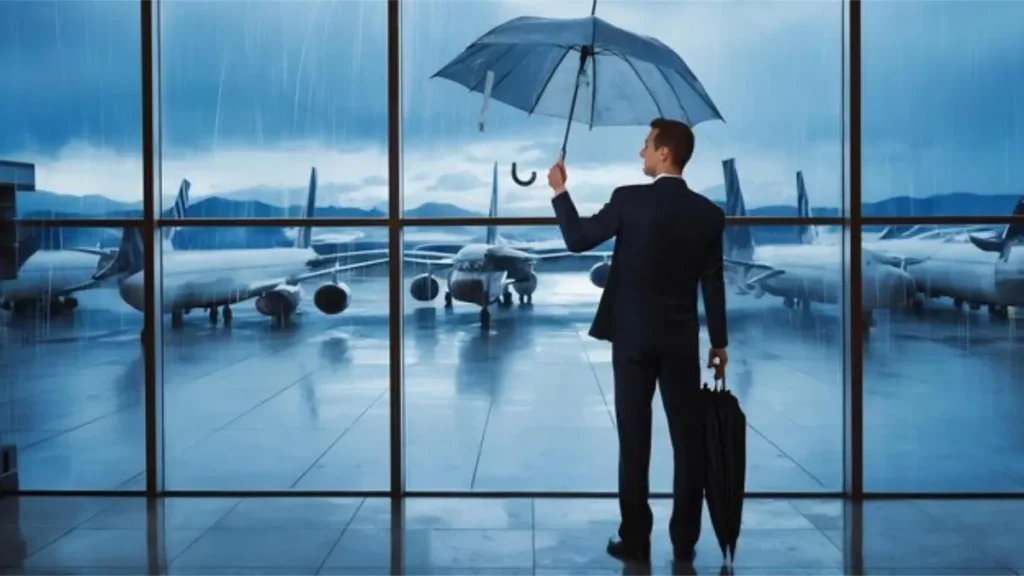
Airline operational challenges are intensifying across the United States as severe weather, crowded airspace, limited capacity and strong summer travel demand place additional pressure on carriers and airports.
For passengers, the effects can appear straightforward: a delayed departure, a missed connection or a canceled flight.
Behind those disruptions, however, airlines are managing a much more complicated problem. Aircraft, pilots, flight attendants, airport gates and airspace all have to work together on tightly coordinated schedules.
When one part of the system breaks down, the impact can spread quickly.
Weather Remains One of Aviation’s Biggest Obstacles
Severe weather can disrupt airline operations within minutes.
Thunderstorms may force aircraft to avoid certain routes, reduce the number of planes allowed to arrive at an airport or temporarily stop departures.
Strong winds and poor visibility can create additional challenges.
Unlike mechanical problems that affect one aircraft, weather can affect hundreds of flights simultaneously.
That makes weather one of the most difficult airline operational challenges to manage.
Airlines can reroute aircraft and adjust schedules, but they cannot remove the physical risks created by severe storms.
Capacity Is Becoming Increasingly Important
Air travel depends on available capacity.
That includes airport gates, runways, airspace, aircraft and personnel.
When passenger demand rises faster than available capacity, even a relatively small disruption can create significant delays.
The problem becomes especially visible during peak travel periods.
Airports may already be operating close to their maximum practical capacity before a storm or technical problem appears.
Once capacity falls, congestion can increase rapidly.
Summer Demand Adds More Pressure
Summer remains one of the busiest periods for leisure travel in the United States.
Families take vacations.
Students travel.
Business travelers attend conferences and events.
International tourism also increases.
Strong demand means many flights operate with high passenger loads.
When a flight is canceled, airlines may have limited seats available on later departures.
That makes rebooking more difficult and can leave passengers waiting much longer.
Aircraft Scheduling Creates a Ripple Effect
Airlines rely on highly optimized aircraft schedules.
A single aircraft can operate several flights during one day.
That efficiency helps airlines serve more passengers without keeping large numbers of unused aircraft.
But it also creates vulnerability.
If an aircraft arrives late, the next flight may depart late.
The next destination can then experience the same problem.
By the end of the day, a delay that started with one weather event can affect numerous flights.
Crew Availability Can Become a Problem
Pilots and flight attendants also operate under strict safety rules governing their working hours.
If disruptions continue for many hours, crews can reach their maximum permitted duty periods.
Airlines then need to find replacement crews.
That can be difficult when hundreds of flights are already affected.
Crew shortages can therefore extend delays even after the original weather problem has passed.
Air Traffic Restrictions Can Slow the System
The Federal Aviation Administration manages traffic across the nation’s airspace.
During periods of severe weather or congestion, the FAA can introduce traffic-management measures.
These restrictions may reduce the number of aircraft entering certain areas.
While they can increase delays, they help maintain safe separation between aircraft.
For airlines, however, the restrictions create another scheduling challenge.
Flights may have to wait on the ground or take longer routes.
Rerouting Increases Complexity
When severe weather blocks a normal route, dispatchers search for alternatives.
That can mean flying around storms rather than through them.
Alternative routes may be longer and more congested.
Multiple airlines may be trying to use the same available airspace.
As a result, the alternative route itself can become crowded.
This creates another layer of operational complexity.
Airports Must Manage Ground Congestion
The problems do not stop in the air.
Aircraft need gates, ground crews, baggage services and fueling.
When flights arrive at unusual times because of weather, airport resources can become difficult to coordinate.
An aircraft may arrive but have to wait for a gate.
Passengers may remain onboard.
Another aircraft may then be delayed because its gate is occupied.
Small operational problems can therefore create a much larger chain reaction.
Travelers See Only Part of the Problem
Passengers understandably judge an airline by whether their flight leaves on time.
But the causes of delays are often outside the airline’s direct control.
A weather system can affect an airport.
The FAA can reduce traffic.
A previous flight can arrive late.
A crew can reach its legal duty limit.
All of these factors can combine.
Understanding that complexity does not make a delay less frustrating, but it explains why airlines cannot always restore schedules immediately.
Technology Is Helping Airlines Respond
Airlines increasingly rely on technology to manage disruptions.
Weather forecasting tools can identify storms.
Flight-management systems track aircraft.
Artificial intelligence and predictive analytics can help airlines anticipate scheduling problems.
Automated passenger notifications can also make it easier to communicate changes.
These tools can improve decision-making.
But technology still operates within physical limits.
An aircraft cannot safely fly through severe turbulence simply because a more advanced scheduling system is available.
Infrastructure Investment Is Becoming More Important
Long-term capacity improvements could help reduce some airline operational challenges.
Airport expansions, improved air-traffic systems and better ground infrastructure can increase the system’s ability to handle demand.
But infrastructure projects take years to complete.
In the meantime, airlines must continue operating within existing constraints.
That makes efficient scheduling and disruption management increasingly important.
Passengers Are Also Adapting
Travelers are becoming more aware of the risks associated with peak-season flying.
Many passengers now monitor weather forecasts and flight statuses before heading to the airport.
Some choose longer connection times.
Others prefer nonstop flights to reduce the number of opportunities for disruption.
These decisions can help travelers reduce their exposure to network problems.
Airlines Are Under Pressure to Improve Recovery
The ability to recover quickly after a disruption is becoming almost as important as preventing delays.
Airlines that can reposition aircraft, crews and passengers efficiently may restore normal operations faster.
That can reduce costs and improve customer satisfaction.
The challenge is particularly important during periods when disruptions affect multiple airports simultaneously.
The Bigger Picture for U.S. Aviation
The current environment demonstrates how closely connected the American aviation system has become.
Weather affects airspace.
Airspace affects airport capacity.
Airport capacity affects aircraft schedules.
Aircraft schedules affect crews.
Crews affect passengers.
Every part of the system is connected.
What Travelers Should Expect
Passengers traveling during periods of strong demand should plan for some uncertainty.
Checking flight status before leaving home is essential.
Travelers should also allow additional time for connections when severe weather is forecast.
Keeping important airline information accessible can make rebooking easier if something goes wrong.
Flexibility remains particularly valuable during peak travel periods.
A More Complicated Future for Airlines
The combination of weather, capacity constraints and high passenger demand means airline operational challenges are unlikely to disappear.
Climate and weather patterns can create unpredictable disruptions.
Passenger demand can shift quickly.
Airports need years to expand capacity.
Airlines must therefore become increasingly efficient at managing uncertainty.
For travelers, that may mean accepting that the modern airline experience is not only about getting from one city to another.
It is about navigating a complex network in which weather, infrastructure, technology and human decisions all influence the final journey.
As summer travel continues, airlines will face the difficult task of keeping that network moving while maintaining the one requirement that cannot be compromised: safety.
Source angle: Recent FAA and aviation-industry reporting on severe weather, airspace capacity, airport congestion, aircraft scheduling, crew availability and the operational pressures created by strong U.S. summer travel demand.